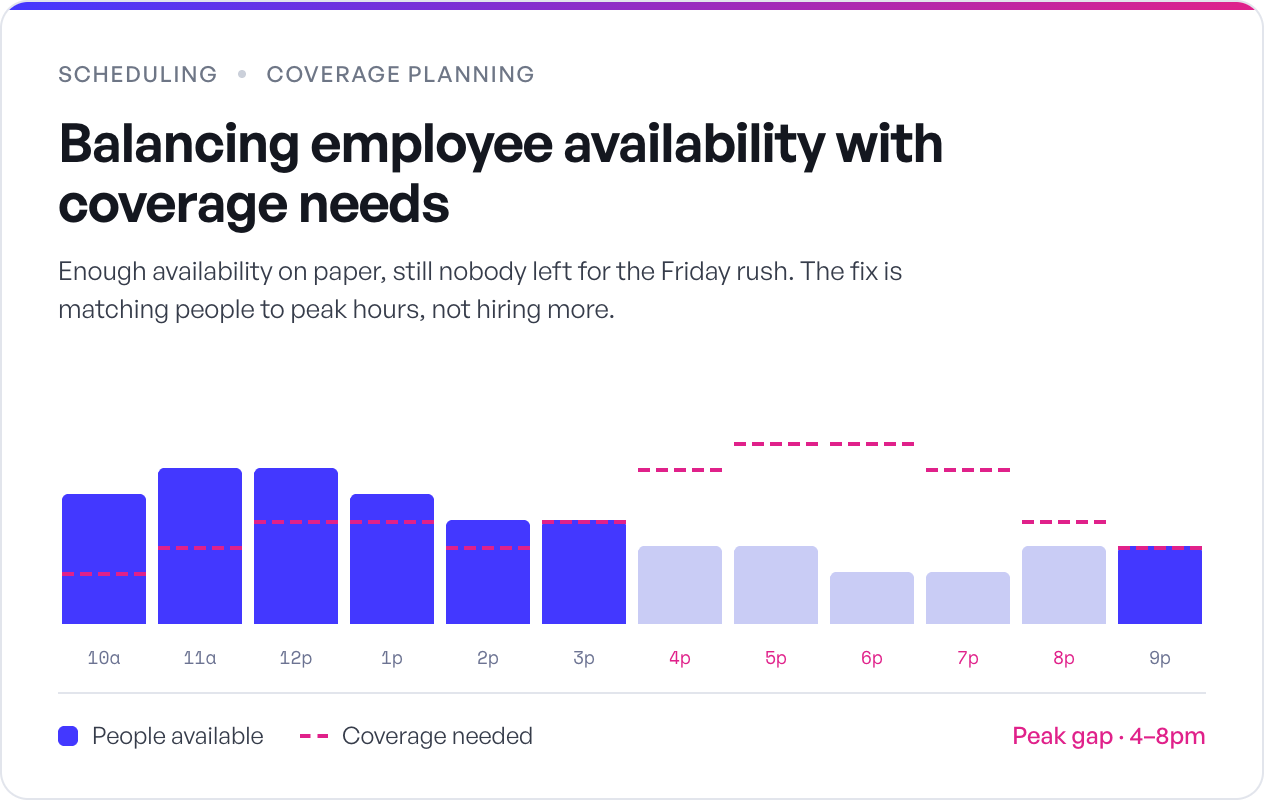
Every scheduler eventually hits the same wall: you have enough total availability on paper, but not enough people available at the actual busy hours. Someone can only work mornings, someone else only evenings, and your Friday 4-8pm rush has nobody left to cover it. This isn't a staffing shortage — it's a mismatch between when people are free and when you need them, and it needs a different fix than "hire more people."
Why Availability and Coverage Drift Apart
Availability is submitted once and rarely revisited. Coverage needs shift week to week based on sales patterns, season, or bookings. If you're not comparing the two side by side regularly, gaps open up quietly:
- New hires all get onboarded with similar shift preferences (usually daytime), leaving evenings thin.
- A few employees' life circumstances change (school schedule, second job) and their availability shifts, but nobody updates the master plan.
- Demand patterns change — a new promotion drives Saturday traffic, but the schedule template was built for a quieter Saturday six months ago.
The fix isn't asking people to be more flexible. It's catching the drift early by checking actual availability against your busiest hours before you build the week, not after a shift goes unfilled.
A Practical Way to Match People to Peak Hours
- Map your real peak windows first. Pull whatever data you have — sales by hour, call volume, patient load — and identify the 3-4 windows each week where being understaffed actually hurts. Don't guess; check.
- Sort availability against those windows, not the whole day. An employee "available all day" isn't as useful as one who's specifically free during your 5-7pm crunch. Rank people by fit for your peak windows first, then fill the rest.
- Build peak coverage before easy coverage. Schedule the hard hours first while you still have the most options. Slow mid-morning shifts are easy to fill later; don't burn your flexible people on them early.
- Leave one deliberate overlap per peak window. A 15-30 minute overlap at shift change during your busiest hour absorbs late arrivals and handoff time without leaving the floor short.
- Recheck availability every few months, not just at hiring. People's lives change. A quick "still accurate?" prompt each quarter catches drift before it becomes a chronic gap.
When the Gap Won't Close With the People You Have
Sometimes no amount of clever arranging solves it — you genuinely don't have enough people available during peak hours. At that point you have three honest options: hire specifically for that window (say so in the job posting), offer a modest premium for those particular shifts, or accept thinner coverage there and adjust service expectations accordingly. What doesn't work is repeatedly asking the same one or two flexible employees to keep plugging the gap — that's how you lose your most reliable people to burnout.
This is also where an open-shift board earns its keep: instead of a manager scrambling to find one person for a hard-to-fill peak shift, it's posted where everyone can see it, and whoever's actually free and willing claims it. It doesn't fix a genuine understaffing problem, but it does mean you're not the single point of failure for every gap, and unfilled peak shifts show up as a clear, visible list rather than a surprise on the day.